
Paramus Previous Residents Sources
Previous residents are documented in layers. A deed chain is strongest for recorded ownership and legal parcel continuity. A telephone book or directory can add a subscriber or household at a point in time. Census schedules add an enumeration snapshot, and permits or obituaries can explain construction, a family event, or a later estate trail. None of those sources is a complete list of everyone who lived at a Paramus address. Read the date, source type, and gap beside each name.
| Source | Years It Covers | Where Held | What It Shows |
|---|---|---|---|
| Bergen online land index | January 1, 1970 to present | BCLRS | Recorded parties, instruments, dates, and legal references; not an earlier online chain |
| Historic deed books and indexes | Pre-1970, exact series to verify | Clerk, archives, libraries, and FamilySearch | Earlier transfers and legal descriptions; no guaranteed single online run |
| Bergen telephone books | 1954 Paramus-area volume, then listed regional runs | Bergen County Historical Society | Telephone-subscriber evidence, with unlisted households absent |
| Regional directories | Ridgewood 1897 to 1973, gap from 1914 to 1926 | Bolger Heritage Center microfilm | Regional context only; verify that a Paramus locality page is present |
| Federal census | Public releases follow the 72-year rule | Libraries, FamilySearch, NARA | Household and enumeration snapshot, not yearly address history |
| Paramus permit or newspaper material | Portal start and exact local hit vary | SDL, borough request, and library microfilm | Project dates, notices, or event leads that need corroboration |
Begin with BCLRS for a post-1969 recorded transfer. For an older address, take the same legal description to deed books and grantor-grantee indexes, then add historical directory and census evidence. A Paramus house with a 1950s or 1960s paper trail may need both a regional telephone volume and a census release. Previous-resident research should state the difference between an owner, a subscriber, a recorded party, and an enumerated household.
Paramus Previous Residents Parcels
Start with the current parcel, even when the goal is to identify past residents. The Bergen property search supports Location, Owner Name, Block, Lot, and Qualifier searches for district PARAMUS. Record the property address, block, lot, qualifier, PAMS PIN when shown, assessment year, and deed or SR1A reference. These fields make it possible to test whether an older deed applies to the same legal parcel.
Do not treat the current owner or mailing address as an occupant list. A mailing address can be outside Paramus, can be a contact destination, or can be redacted. A situs address identifies the taxable land or building. The current assessment portal does not state an opening coverage year; New Jersey GIS material describes a historic tax database reaching back to 1988, without guaranteeing continuous detail for every parcel. Missing cards should be requested by parcel and period from the assessor or through a narrowly framed records request.
Trace Paramus Past Owners
The backward trail is legal-description work. Find the current owner and parcel first, then find that owner's acquisition deed as grantee. Read the seller, recording date, instrument number, lot and block, municipality, map or plat reference, and legal description. Search that seller as a prior grantee at the same legal description, then repeat. A name-only chain can jump to another person or another parcel with the same surname.
- Capture the current Paramus parcel's block, lot, qualifier, map reference, and every available legal-description clue.
- Search the present owner's acquisition as a grantee in Bergen land records and save its instrument or book/page reference.
- Read the grantor and compare the municipality, lot/block, map or plat, and legal description with the current parcel.
- Search that grantor as a grantee for the earlier transfer, retaining every matching legal reference.
- Stop or flag the chain when a subdivision, merger, estate transfer, foreclosure, renumbering, or pre-1970 boundary breaks the parcel identity.
- Continue before 1970 through the clerk, archive, library microfilm, or FamilySearch catalog rather than assuming the web index is complete.
- Grantor and grantee
- The grantor transfers an interest in a recorded document. The grantee receives that interest.
- Chain of title
- A documented sequence of recorded transfers for the same legal parcel, not simply a list of shared surnames.
- Legal description
- The lot, block, map, plat, or written land description that tracks a parcel when street labels change.
For a previous-residents trail, identify each person by the role the record supports. A grantor or grantee is a recorded party. A later directory or census entry may establish a household connection, but it does not rewrite the legal chain of title.
Paramus Previous Residents Deeds
Bergen County Land Records provides public online access from January 1, 1970 forward. Its Party tab requires the form Last-Name First-Name, with no comma. Town/Lot/Block supports a different legal search: town is required, while lot, block, document type, party, and dates can narrow the result. The database also offers document-type, instrument-number, and book/page searches. A map number can be used for map work, but a map browse is not the same as a legal lot-and-block search.
A returned BCLRS result can include grantor or grantee, document type and code, recording date, instrument number, book/page, municipality, lot/block, consideration where indexed, and a linked detail or image. Search spelling variants because the county warns that indexing accuracy is not guaranteed. The record may show a transaction without naming every member of a household.
Open the Bergen deed-index party search before entering a name or parcel reference.
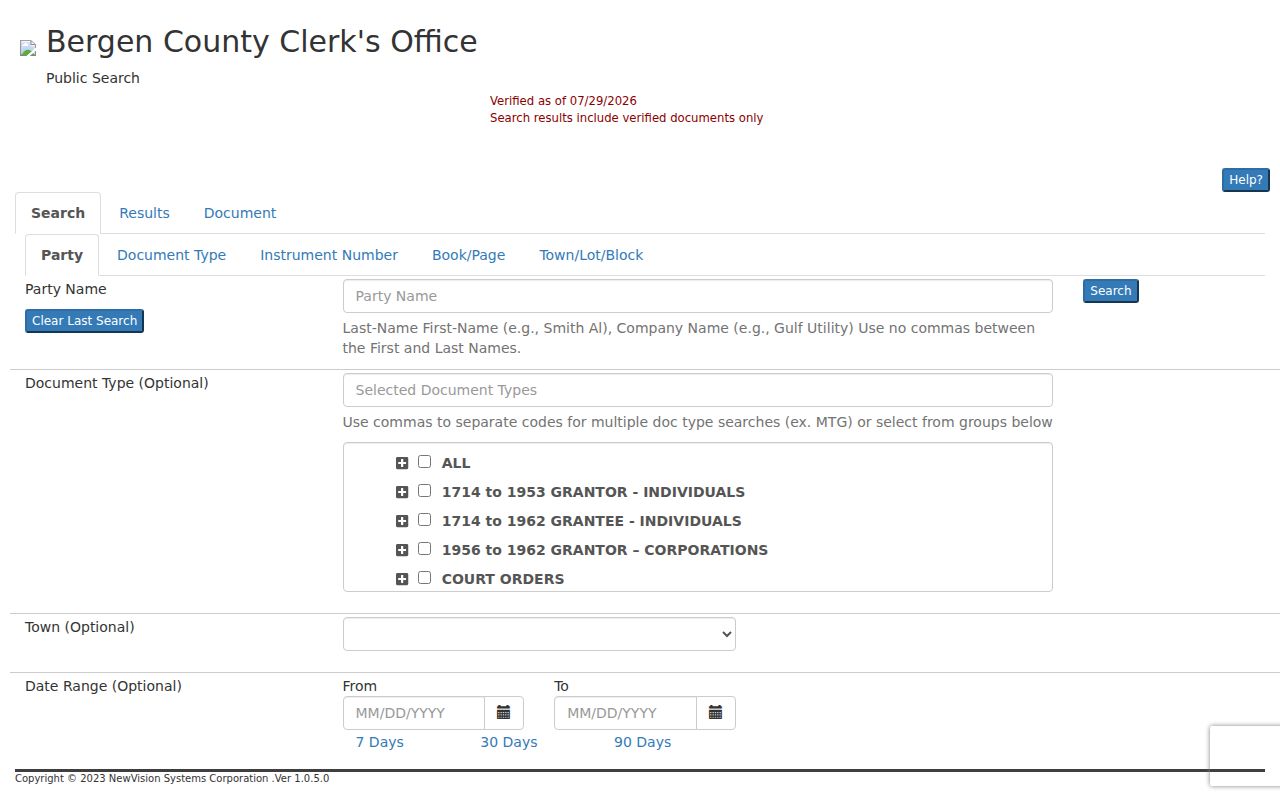
The party-search screen is most useful after the current parcel has supplied a matching party name, municipality, and legal description.
Note: An index result can locate a recorded event, but the image and its legal description determine whether the transfer belongs in the same chain.
Paramus Previous Residents Timeline
Directories and census schedules add the household layer to a deed chain. Bergen County Historical Society lists a 1954 special telephone directory covering portions of Paramus, followed by 1960 to 1962, 1971, 1974, 1975, 1977, 1981, 1984, 1986 to 1988, and later regional runs. Inspect the actual volume before treating it as Paramus coverage. Entries may identify a subscriber, spouse, occupation, locality, address, and home notation, but a subscriber list misses unlisted households.
- Find the address in a reverse or criss-cross directory when one is available, and transcribe the street spelling and every abbreviation exactly.
- Check the alphabetical section for the same name, then preserve spouse, occupation, locality, and address language as printed.
- Pair the directory year with the nearest released federal census snapshot and compare the household, address, and enumeration context.
- Use a deed, tax card, obituary, or newspaper item to resolve an owner, subscriber, business, or household conflict.
Federal schedules are released after 72 years. The historical holdings and their publisher-specific notation are treated in more detail in the Paramus Directory Book. For previous residents, the important discipline is date matching: a directory entry is a snapshot and not evidence that the same household stayed there throughout the decade.
Paramus Previous Residents Gaps
Street labels and parcel lines can interrupt a Paramus address trail. No Paramus-specific borough-wide renumbering or street-renaming year was verified in the available official sources. Do not silently equate an old number with a current number. Test the connection through a deed, tax card, plat, old map, postal directory, borough road record, or legal lot description. A subdivision or merger can make the same street number refer to a different parcel over time.
The Bolger Heritage Center has a house-history route, map lists, local-history material, and librarian assistance for Ridgewood. It is a regional research model, not proof that its maps cover Paramus. No Paramus-specific Sanborn run or online years were verified. The safest next step is to ask a local or regional collection for a Paramus map, plat, or street reference and label any unresolved connection as a gap.
The New Jersey State Archives genealogical collections provide a documented route to earlier period material when a modern address stops yielding results.
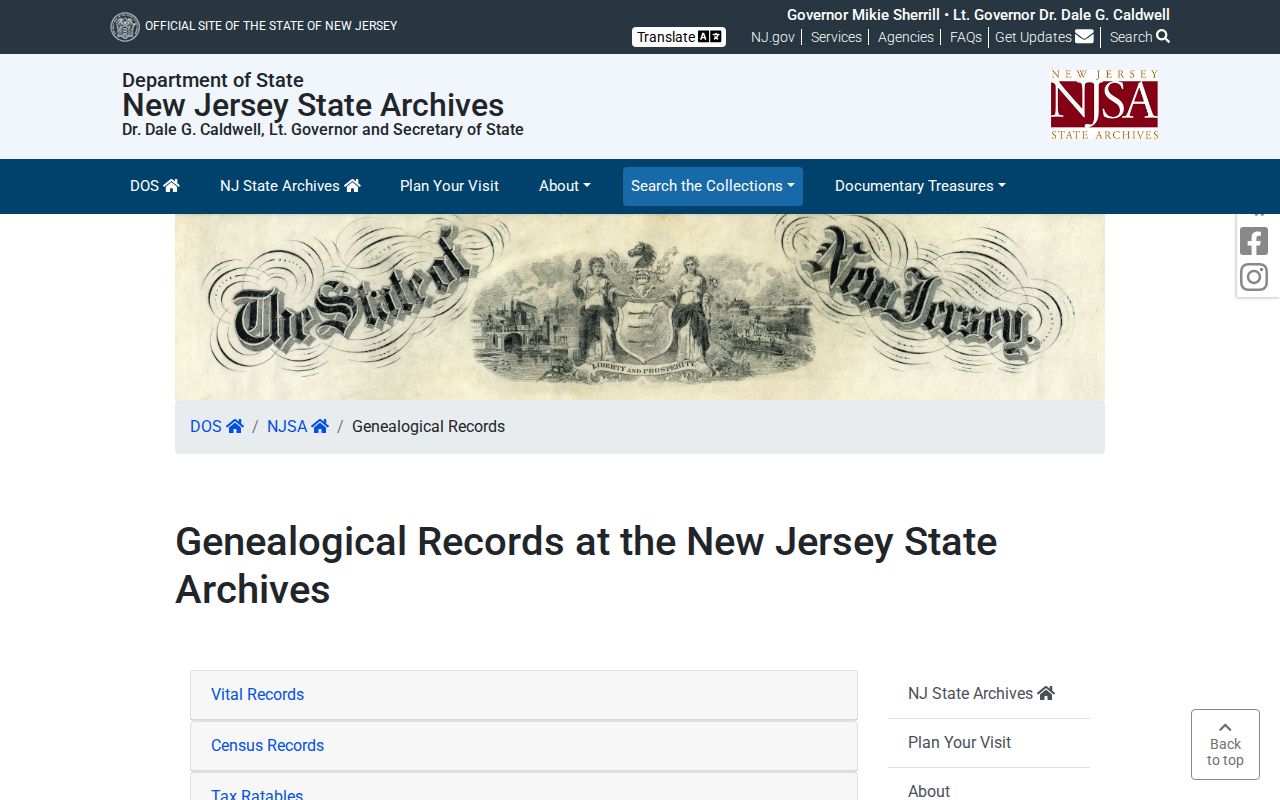
Archive collections can bridge a record gap, but their published periods and access rules must be checked before assigning an old name to a specific Paramus address.
Paramus Development-Era Address Clues
Paramus records reflect changing land use. The borough's history describes farms and mills before later suburban and commercial growth. Access from the George Washington Bridge after 1931, followed by the 1957 and 1958 mall openings, helps frame a possible address era. A nineteenth-century family may appear through church, cemetery, road, mill, or farm records instead of a modern number. A later commercial-corridor address may appear in business, tax, permit, or directory material without representing a household.
Use these eras as questions to test, not as proof. Church and cemetery sources include Paramus Reformed, True Dutch Reformed, Valleau, and Paramus Plains material. The same surname can describe an unrelated family, a farm, a business, or a civic connection. Pair each geographic clue with a deed, census, directory page, or custodian record before extending the previous-residents trail.
Paramus Obituary and Probate Endpoints
Obituaries and probate often close an address story rather than begin one. A notice may identify a decedent, spouse, children, funeral home, former location, or civic affiliation. Bergen Surrogate probate and intestacy records can identify a decedent, fiduciary, or next of kin in public portions, but the office has no public online name-search index. The proper route is a particular estate, will, or probate request through the Surrogate's mail, email, or office process, with confidential portions withheld.
Regional research channels include early Bergen County newspaper microfilm from 1858 to 1938 and the Bergen Record from 1970 to 2013 at the Bolger Heritage Center. A newspaper item is a lead, not a replacement for a deed or official estate record. Compare the name, date, address, and family relationship with the rest of the address timeline before adding past residents to it.
Note: Probate, cemetery, and obituary evidence may explain a household change, but each source has its own date, privacy boundary, and level of detail.
Paramus Past Household Limits
Past residents should be described with the source's own level of certainty. A deed can identify a recorded transfer, a directory can identify a subscriber or named household, and a census can identify people counted on an enumeration date. Utilities are not public resident lists. Permit material identifies a project participant, not necessarily a person living at the address. An absence in one source can result from an unlisted number, an unindexed volume, a protected record, or a record that was never made.
Daniel's Law and the Address Confidentiality Program can limit address disclosure. Sealed, expunged, juvenile, adoption, protected vital, and confidential probate information cannot be repurposed as address-history material. If an official record appears wrong, keep the source details and contact the custodian for a correction path rather than reposting sensitive information.
Lawful use. Use Paramus previous-resident research for family history, address history, estate questions, or personal curiosity. Never use old records to track, stalk, harass, intimidate, or expose a living person or protected address.